

Good morning.
How are you all and how is the weather at your end? It’s a bit cool right now. Twenty-one degrees in August, grey sky, and my bike has almost stayed in the garage all week.
It is supposed to clear whole weekend…. well, it will clear the moment nobody has time to enjoy it.
A few weeks ago the weather was doing the opposite. I played padel, got on my bike to ride home, and watched a thunderstorm roll in. And the fact that I then sat down for a call twenty minutes later like nothing happened is roughly what running a capital advisory feels like in summer.
Half of Europe is away, deals drag, and then a week arrives where three founders need an answer on the same afternoon.
And it’s August…. I am not going to pretend August is a productive month in European venture. If you know the ins and outs of fundraising, you know why it pays to review your recent investor calls right now.
When you strip away the noise, you can actually hear the signal.
What the calls are saying?
So I looked back at four of my latest calls from the past few weeks. These are the real patterns happening behind the scenes and they’re way more interesting to look at than another generic post on your feed.
A US spatial-AI company raising $2M at $18M pre:
Half a million in the bank, around $35K a month burn, and not a single sales hire yet.
What they actually do is simple - they walk through a physical space with a camera and turn it into a photorealistic 3D copy you can move around inside from anywhere in the world.
And their obvious target market is luxury real estate.
A buyer in London can walk through a house in Hawaii without flying there
Nice product, easy demo, easy to explain to an investor
It is also a market where you sell to one agent at a time, for one listing at a time, and they leave when the listing sells.

The market they nearly buried on slide nine is a police department. Crime scenes get cleared within hours and after that the scene is gone forever. If you can capture it in 3D, the investigation still has the room months later, and a jury can be walked through it.
The established player in this space sells hardware for $100k+ based on one thing: measurement accuracy.
This challenger sells on what it looks like. And it sounds like the weaker pitch, until you follow the logic to the courtroom:
An officer only has to testify that the capture is a true and accurate representation of the scene.
Once they do, it’s admissible.
They didn’t just build a cheaper product; they solved for the actual legal bottleneck.
Now compare the two businesses.
Real estate is a $2,000 customer who churns
And police department is a $20,000 a year licence on a multi-year contract, and once your footage has been accepted in court, every future case runs through the format the department already trusts
There are roughly 18,700 agencies in the US and almost none of them have solved this.
Same company, same technology, same team. One market is a demo and the other is infrastructure. Founders reliably lead with the one that photographs well.
A UK fintech raising £3M for tokenised luxury assets:
Their co-founder sold a payments company for $2.74 billion. He has already put £1.5M in. And he is deliberately not writing the rest of the cheque, because his position on the cap table would go higher than either of them wants. It is much more about the type of money than the money itself.
That is the most underrated decision in fundraising. Founders optimise for the fastest cheque. The good ones optimise for whose name sits next to it.
Two clients, unrelated industries, same realisation in the same month.
If your story is about doing a task better, you get bought out of a department budget.
If it is about covering a system, you get bought out of a strategy budget.
Same underlying data, but two completely different strategic takeaways.
It’s a reminder that numbers don’t speak for themselves, perspective leads the direction.
One last pattern that I observed and it’s a surprisingly common blind spot:
Every single deck was out of date.
Pricing had changed and never made it onto the slide.
Technical claims no longer matched the product.
Too many founders are negotiating off documents that stopped describing their actual business months ago.
And then, what’s going on in Europe?
The structural gap is not closing, at least not very soon.
Median Series A in Europe sits around $28M pre at roughly 13x ARR. In the US it is closer to $48M at 22x. Same company, same metrics, nearly double the valuation. Sixty-two European unicorns have left since 1995 and fifty went to the US. That is arithmetic.
The middle is worse. In 2018, one in three seed-funded startups reached Series A within two years. Today it is one in seven. Median wait has stretched past 36 months while average runway sits near 22. That is a 14-month hole in most cap tables.
There is no clever hack here, honestly.
I’d love to point to some complex strategy that makes capital raising effortless, but the truth is unglamorous and somehow, it comes down to the basics.
Raise for a milestone rather than a number
Start the investor relationship a year before you need it
Treat the extension as a plan rather than an emergency
Capital itself is not scarce. Money is abundant. It is just not standing where early-stage founders are.
Gulf capital into UK operators, private credit into mid-market, advisory into refinancings. The pipes are full. The valve at seed and Series A is the narrow part.
By the way, a lot of founders are now taking their deck to the giant buyout firms because that is where the pool is. Only about 47% of them lean toward venture at all, and roughly 37% do strictly private equity. PE buys control and cash flow today. Venture buys upside.
Pitching a buyout titan on a seed round does not make you ambitious, it makes you misaligned, and you become somebody’s hobby allocation.
I have posted a detailed post on LinkedIn.
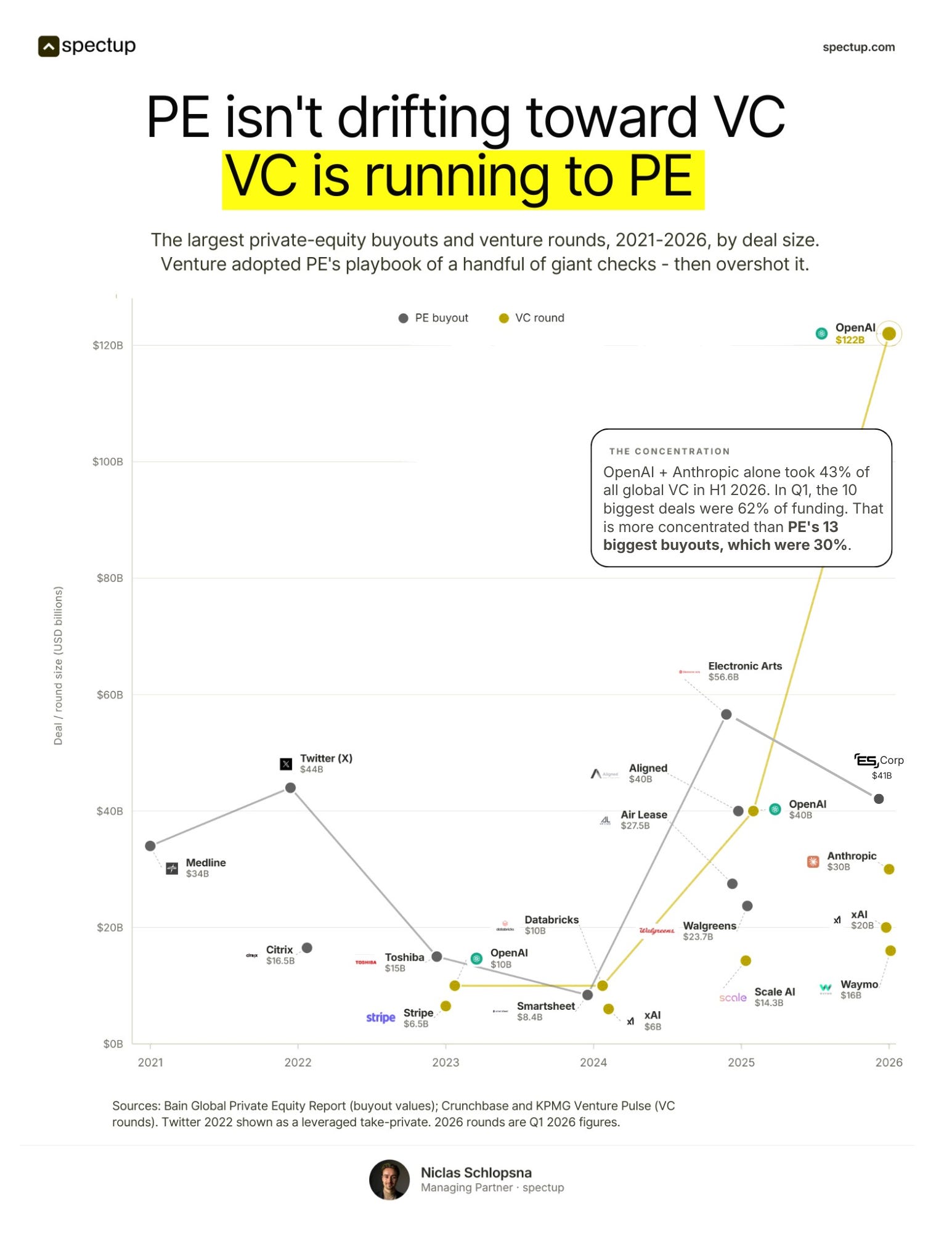
Where capital is going next?
If you look at Y Combinator’s latest Requests for Startups, you aren’t just looking at a wishlist, you’re looking at a map of where smart money expects the next decade of capital to flow.
And it’s surprising to see how quickly general AI has lost its standalone value.
The signal is loud and clear: AI is no longer the differentiator. Building durable value means anchoring AI deep inside a niche, a workflow, or a physical industry.
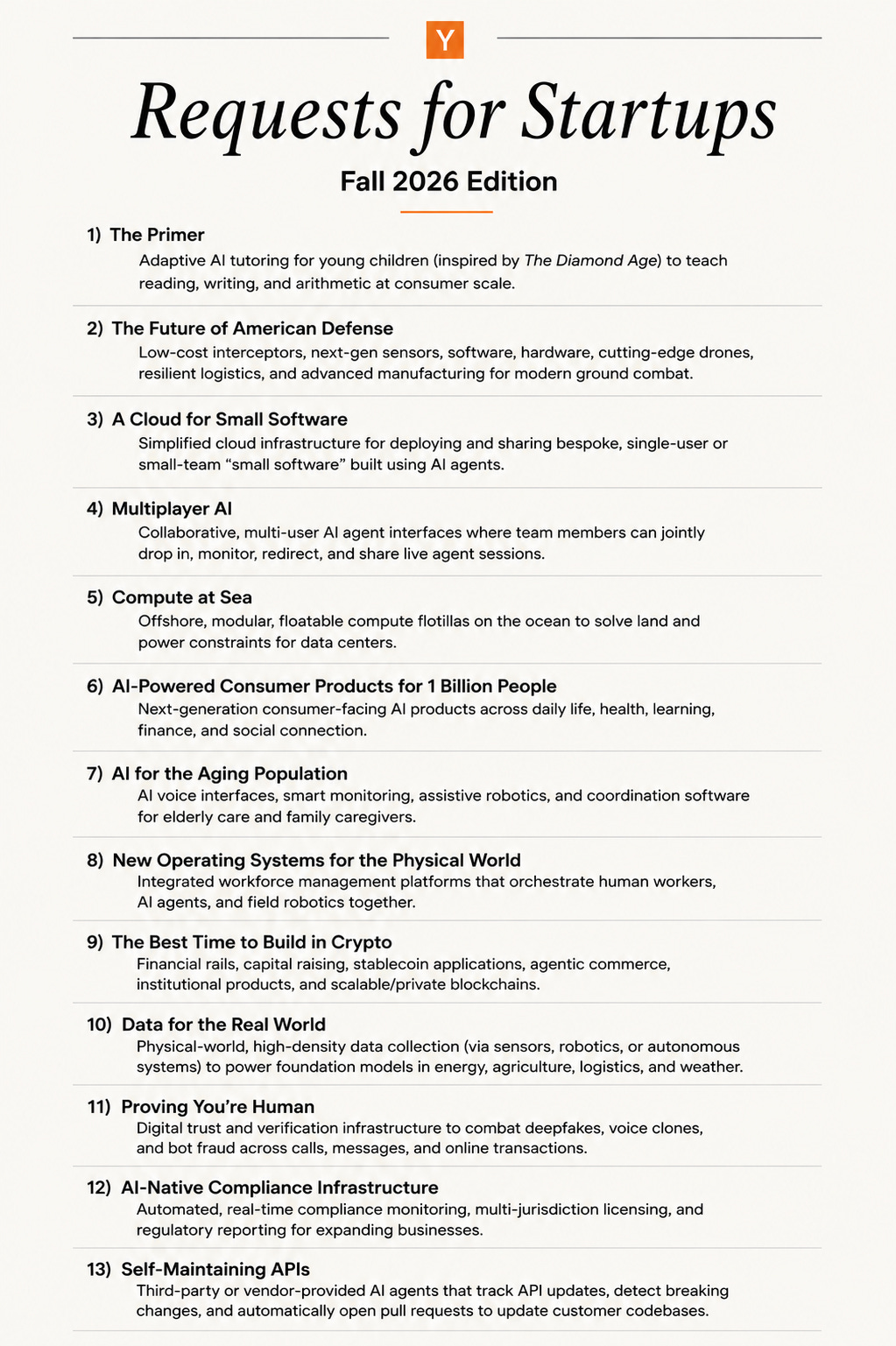
Defense & Hard Tech: Resilient logistics, autonomous sensors, and advanced manufacturing.
Demographic AI: Highly tailored solutions for aging populations and early education.
Physical-World Robotics: Operating systems that coordinate humans, bots, and field operations.
Deepfake Defense: Proof-of-humanity and verification tech.
Agentic Infrastructure: Self-healing APIs and financial rails for AI-driven commerce.
What I notice is how physical the list has become. Sea, sensors, drones, robotics, elderly care, ground combat, agriculture. Two years ago every request was software eating software. This one is software going outside.
If you are building in one of these, the funding environment is warmer for you than the averages suggest. And if you know someone who is, forward this to them. That is the useful part.
New episode is live
Another episode of Deal Makers (& Fakers) went out last week.
If you have been anywhere near the Munich startup scene, you know him. He founded the LMU Entrepreneurship Center back in 2007 and built the German Accelerator, and somewhere in there he has mentored well over a thousand founders. He is now running VU Europe out of Munich, which trains people to become investors - ANDY GOLDSTEIN
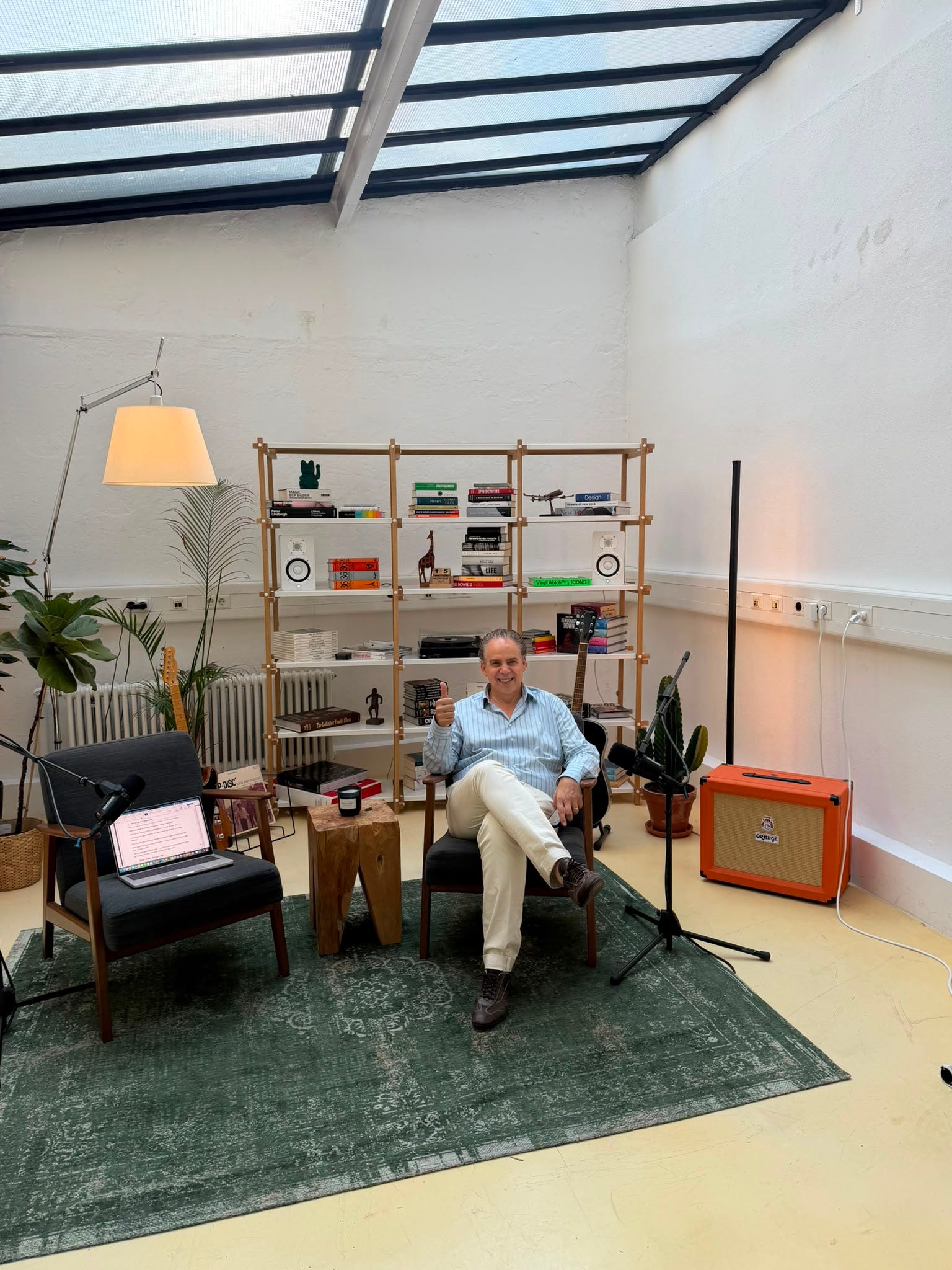
Everyone says Europe has a founder problem. Andy says the founders are fine. He thinks the shortage is on the other side of the table. His number is that around 75% of VC funds never generate carry, meaning most people writing cheques in this industry never actually return real money to the people who gave it to them. And most of them learned the job by doing it, live, with someone else’s capital.
Go, watch it on Youtube or wherever, you listen to podcast.
By the way, I love recording podcasts with such amazing guests. Because, I get to sit with people building genuinely extraordinary things and ask them the questions I would ask in a diligence call, except here they actually answer.
About spectup:
Capital advisory for companies raising from institutional investors (family office, VC, private equity) and for GPs raising a new fund and need intros to Limited partners
This is a strong piece. The point that stood out most to me is that Europe does not necessarily lack capital, it lacks capital in the right part of the market.
The seed to Series A gap explains a lot, and I also liked the point about AI moving from being the product to being embedded inside real workflows and industries.
Would be good to connect.