

Hello. How are you? And how is the weather at your end?
I hope you are all keeping cool and doing well wherever this finds you.
It has been hot the past few days in Munich. Like properly, shitty hot.
You might say I am being dramatic. Well, I am not. Germany just broke its all-time temperature record on Saturday: 41.5 degrees.
Down here in Bavaria the weather stations have been reading high 30s for over a week now, and half of Munich has quietly relocated to the Isar or to whichever Biergarten still has a patch of shade. You learn to plan your day around where the sun is not. That is part of why things feel slow right now.
If you are not from Germany, you might not know this one. We have a word for this stretch of summer, Sommerloch, the “summer hole”.
That long run where half the country is on holiday, the offices empty out, and everything slows to a crawl. So when you have to travel in a summer like this one, you avoid it if you can. (Unless it is needed)
Well, for me, lately it was needed. I spent the middle of june, sweating through Berlin, partly for the OPUS founders’ event and partly to see how things were going at SuperReturn, the largest LP and GP gathering in the world.
I had also booked two podcast recordings in a studio, my first proper on-ground sessions, so I was looking forward to those.
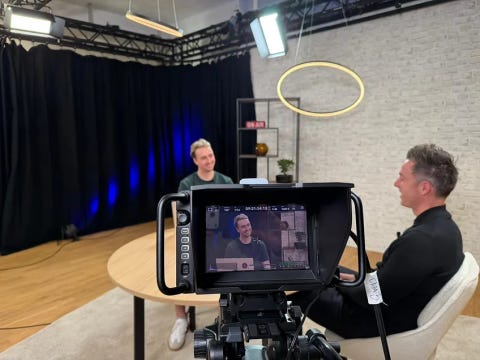
The bit I enjoyed most, though, was watching a few thousand people in suits trying to look relaxed and chic in 30 degree heat, all pretending they were not there to do exactly the same thing.
Well, low-key, I loved it.
I did not work the event directly, but I did take a run of calls with founders and partners while I was over there. Most of them went back to back, one straight into the next. On one call, the founder pitched me with a leaf blower roaring somewhere behind him on his end.
That is the best thing that happened all at once.
So, while I am writing this, I am sitting in my apartment in Munich, thinking about one question that keeps popping up on my calls.
Why do I still get on a train for onsite events?
People ask why we bother travelling to conferences at all when most of a relationship can be built online. I used to believe networking events were not for me. But if you want to work fast and scale fast, these rooms turn out to be unavoidable.
I have been in this long enough to walk into most of them expecting very little. You show up, you perform, you leave with a stack of cards you will never use. Two people are trading details they will bin in the taxi home. I am a little allergic to the whole thing by now.
And I am not entirely wrong to be. We all know the pattern, myself included: You collect 500 plus connections and end up with maybe three people you would actually call at midnight when something is really going wrong. That ratio gets worse the longer you build, not better. We keep showing up because we think we have to and because building alone is worse.
A lot of that interaction can happen online, true.

I have working relationships that ran for years over video before I ever met the person across a table. But trust moves faster in person, and a lot of senior investors still want to look you in the eye before they wire money.
Meeting in person is unavoidable, and a week like this one buys months of it in a few days. That is the whole reason to show up.
Ok, so, what was the OPUS event in Berlin?
I really want to share this story with you all.
OPUS is the one room that has been different for me. I joined last year without much conviction, figured it was another community, and left with people I now genuinely call when things go wrong.
If I say ‘not just contacts but actual partners, friends, and people I can call for backing when I need it’.
The part that stays with me is that it is built to be hard to get into. They turn down most applicants on purpose. The rooms are small and made for real conversation, a mix of in-person and online. And it is not a logo and a mailing list. They raised an actual fund, run their own investor syndicate, and put money into founders in the room through DayZero, which backs pre-seed and seed companies across EMEA. There is more besides.

Last week in Berlin was us starting to pull the German chapter together before it launches properly in September. The details are on my LinkedIn. If that sounds like your kind of room,
Ok, as for capital advisory, here are a few signals I am watching
Apart from the networking, a handful of conversations this week pointed at things worth flagging.
1. The exciting pitch and the fundable pitch are not the same pitch
I talked to a founder with a genuinely fun idea, a shopping app backed by a famous athlete as co-founder and a circle of celebrities supplying reach at launch.
He had a good story but the wrong room for me. He wanted fast-moving angels and was openly done with VCs. I had to be straight with him that our network is institutional, and institutions do not fund pre-launch consumer plays at that stage.
Knowing who writes cheques for your specific stage and model saves you months of chasing the wrong people.
2. And yes, the boring businesses are having their moment.
One of the best conversations was with a founder running a roll-up in vinyl record manufacturing. It was pretty unique, maybe because it was neither that generic AI-powered nor shipping any SaaS. Yup, Records.
Revenue roughly doubling year over year, one competitor already bought out of bankruptcy, and a clear plan to keep going. Investors tired of hype like seeing an established business in the real economy.
There is real appetite right now for companies that make and sell actual things, and founders in those categories often underestimate how attractive that is.
The defence and energy founders have the wind at their backs in a way software-only teams do not right now. If you build in atoms, this is a better moment than you might think.
One positioning note while we are here. I get suspicious when an advisor brags about a network of one or two thousand investors. That is not a network, to be honest.
It could be your mailing list, but a real relationship is one where the person picks up when you call. Ask anyone you hire to raise for you how many investors they actually know, not how many they can email.
Well, sitting on both sides of the table is pretty interesting.
I had a call with a fund manager who wanted help raising from his own investors, which is the half of the work nobody talks about. We raise for funds as often as we raise for companies.
His was built the way large allocators like to see it: a real track record, returns that did not simply rise and fall with the wider market, the unglamorous plumbing that lets an institution say yes, a proper structure, lockups, and clean reporting.
If you run a fund and you are raising it, spend less time on the upside you promise and more on whether a careful investor can get comfortable with how the thing is built.
One more pattern worth flagging if you are raising funds:
I met a founder who multiplied their output last year without adding a single person, and being professionally suspicious of clean numbers, I assumed someone was lying.
But, then, 2-3 people flagged it, usually the calmest founder on the call, so I had to check this. The trick is that they handed off the boring work that actually stalls rounds, the data room nobody updated, the follow-up that has been almost ready for nine days, and the investor update stuck in drafts to an AI teammate that sits in Slack like any other colleague.
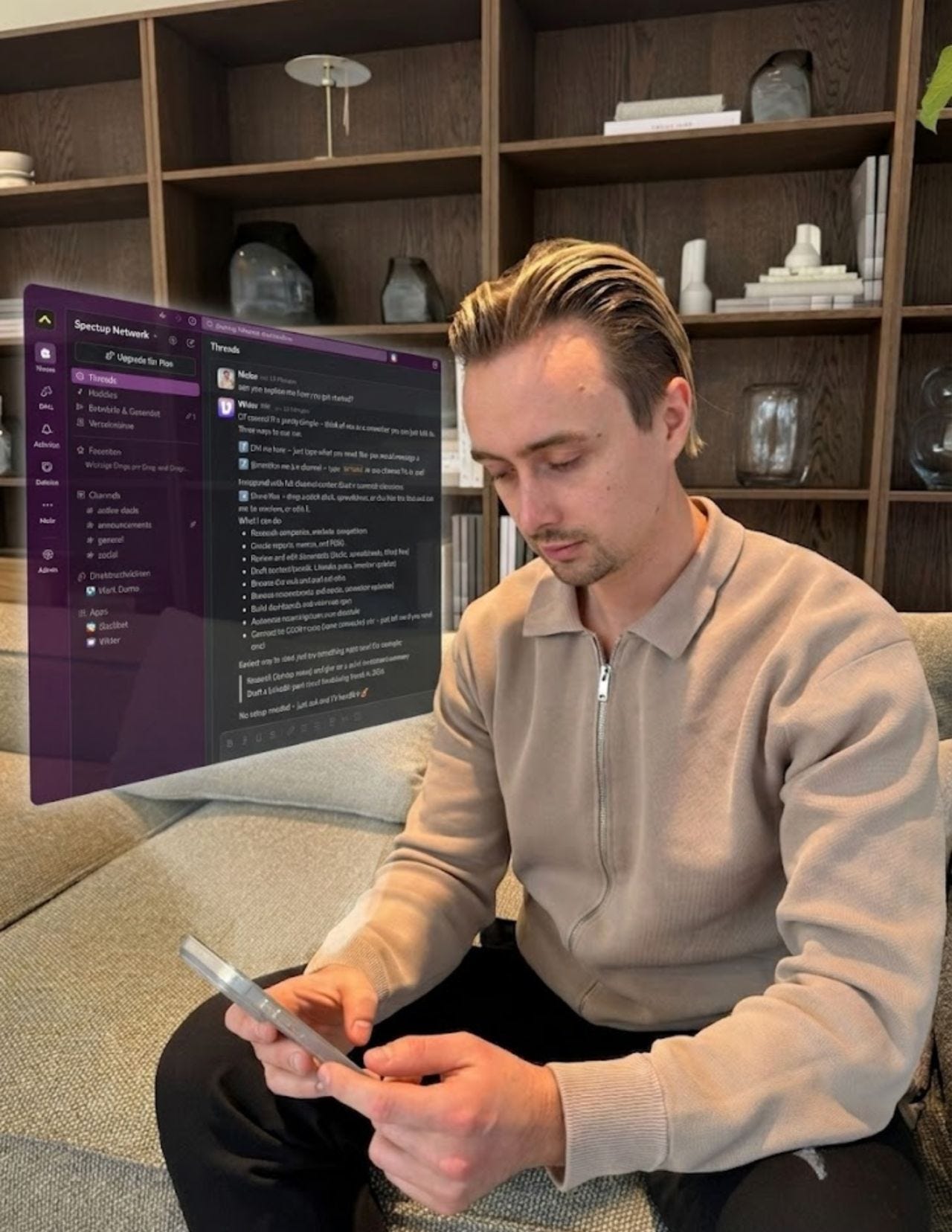
I stole the idea and tried it on our own pile last week, asking it for a clean report on startups that just closed a seed round, and it landed in our channel before my next call started. Faster than I answer my own emails. Investors are quietly rewarding lean teams that ship and side-eyeing big teams that mostly look busy, so this one is
Well, apart from all this, it was pretty chaotic!
Running a full call calendar from the road is its own kind of marathon. I came in off some time away, went straight into back-to-back conversations, and will admit the heat and the pace caught up with me by Friday.
Last thing that I would love to flag here, because I think a lot of people misread it.
Capital advisory looks simple from the outside. Find a company, write a few angles, ship them to investors, and be done. It is not that.
It is closer to a 24/7 hustle. You are always growing something, always in another conversation, and your brain never fully shuts off. I have been running 60-70 hour weeks for a while now, weekends included, and it has caught up with me.
So I am taking a long-overdue break. Ten days. And I am seriously considering switching my phone off for the whole thing.
I hope my anxiety won’t pull me back to my screen. (LOL)
Either way, if this newsletter is useful to you, forward it to one founder who would get something from it. Back soon, hopefully rested and a few degrees cooler.
And last, I want to start writing every week, because there are a lot of things that I want to talk about and share resources. I believe in genuine relationships, where I read what you are sharing and we share insights. But I am not sure if you all are up for it.
So, if you are reading this and you would love to hear more, how about leaving a comment or giving me hints?
More coming soon.
About spectup:
Capital advisory for companies raising from institutional investors (family office, VC, private equity) and for GPs raising a new fund and need intros to Limited partners
🚀
Good read, Nic!